Medusa by Jessie Burton Illustrated by Olivia Lomenech Gill

Exiled, with her sisters, to a far-flung island by the whims of the gods, Medusa has little company except the snakes that adorn her head instead of hair. But when a charming boy called Perseus arrives on the island, lost as he sails the seas on a quest to save his mother, her lonely existence is disrupted with the force of a supernova, unleashing desire, love and betrayal…

The stunning illustrations throughout the book, by Olivia Lomenech Gill really being the island world of Medusa alive.

Jessie Burton has retold this myth superbly, bring it bang up to date with the feminist slant it very much needed. It is told from the view point of Medusa and because of this, the themes come across much more emotionally and with impact.

As Medusa and Perseus gradually tell each other their reasons for being on this far-flung island, we can see that perception of themselves and others is a very personal thing. Perseus holds Poseidon in high regard, Medusa hates him with a vengeance. Similarly, their views on Athena differ too.

There are strong themes of self worth, perception of how you are viewed by others and how this affects your behaviours and attitudes, how the opinions (real or perceived) of others impact on you and ultimately change you.

There are strong themes of consent and respect. Medusa’s feelings of how Poseidon should have behaved towards her (as opposed to abusing his power) and how she was not to blame are deeply felt. Her sisters’ allyship is strong but not all other women are her ally. Athena’s use of privilege and power are selectively abusive.

The promises we make…do we actually know what we are promising at the time? Open ended promises are not always good ones.

Throughout the retelling, Medusa’s view of herself, others in her life and her awareness of how the rest of the world perceives her opens up opportunities for conversations to be had. Important conversations.

Thank you to NetGalley and Bloomsbury for the eARC review copy.

The Memory Thieves by Darren Simpson

What you don’t remember can’t hurt you…

Cyan has lived at the Elsewhere Sanctuary for as long as he can remember, freed by Dr Haven from dark memories of his past life. But when Cyan finds a mysterious warning carved into the bones of a whale skeleton, he starts to wonder what he had to forget to be so happy.

New resident, Jonquil, begins to resist the sanctuary’s treatment, preferring to hold on to her memories – even the bad ones. So when Dr Haven resorts to harsher measures, Cyan embarks on a secret mission to discover the truth about the sanctuary…and himself.

This is an intricately constructed dystopian world, a mixture of what we know blended with sci-fi … an island where the tide went out and never came back again, no wildlife, an invisible boundary shield, a building that can reset its rooms (like 3D Tetris), tracking devices, clocks with no hands, memory suppressing drugs and teenagers who just want to forget.

The themes tackled in this story are difficult ones and raise many ethical questions. Guilt, sorrow, medically induced memory loss, secret experimental drug trials.

Through the story, the author helps us to see that all our memories, experiences and feelings make us who we are, mould us into the people we become. Just because you cannot remember a key event or person does not mean you are no longer unaffected, even subconsciously.

Despite the difficult themes and my worry for what comes next for the characters, I thoroughly enjoyed the story and was engrossed in the lives of the characters and the world they inhabited. This is the first book I have read by Darren Simpson but it definitely won’t be the last.

Thank you to NetGalley and Usborne for the eARC.

The Invisible by Tom Percival

Isabel and her family are poor but happy. They have each other. Isabel finds positives in her world. But one day there is no longer enough money to pay their bills. They have to move to a block of flats in a more urban area.

Isabel struggles to find positives around her and feels herself becoming more and more invisible every day.

Then she realises she can see other “invisible” people. She sets out to help them do small but good deeds. Their invisibility soon disappears and Isabel realises she and her new friends have made a difference.

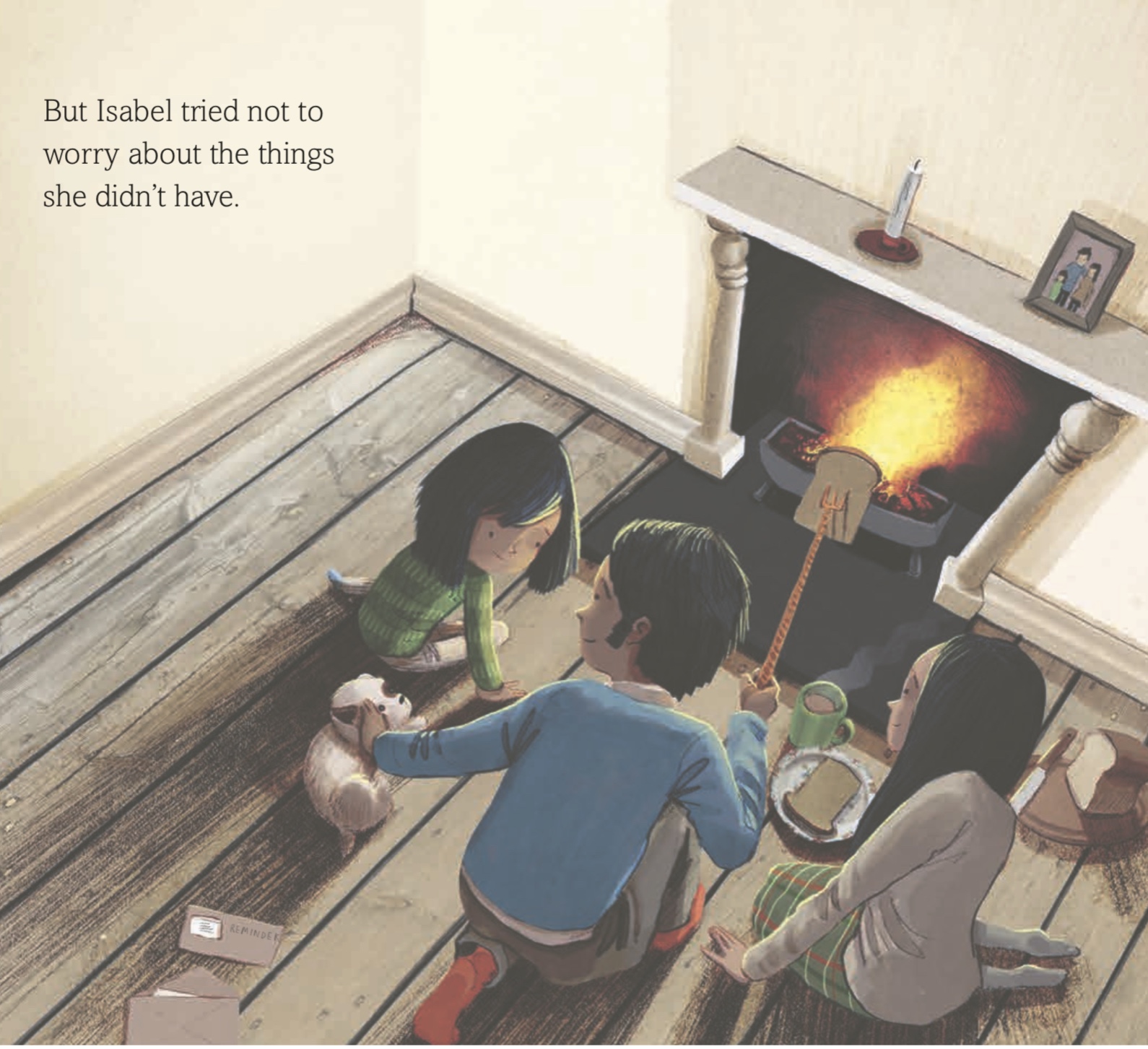
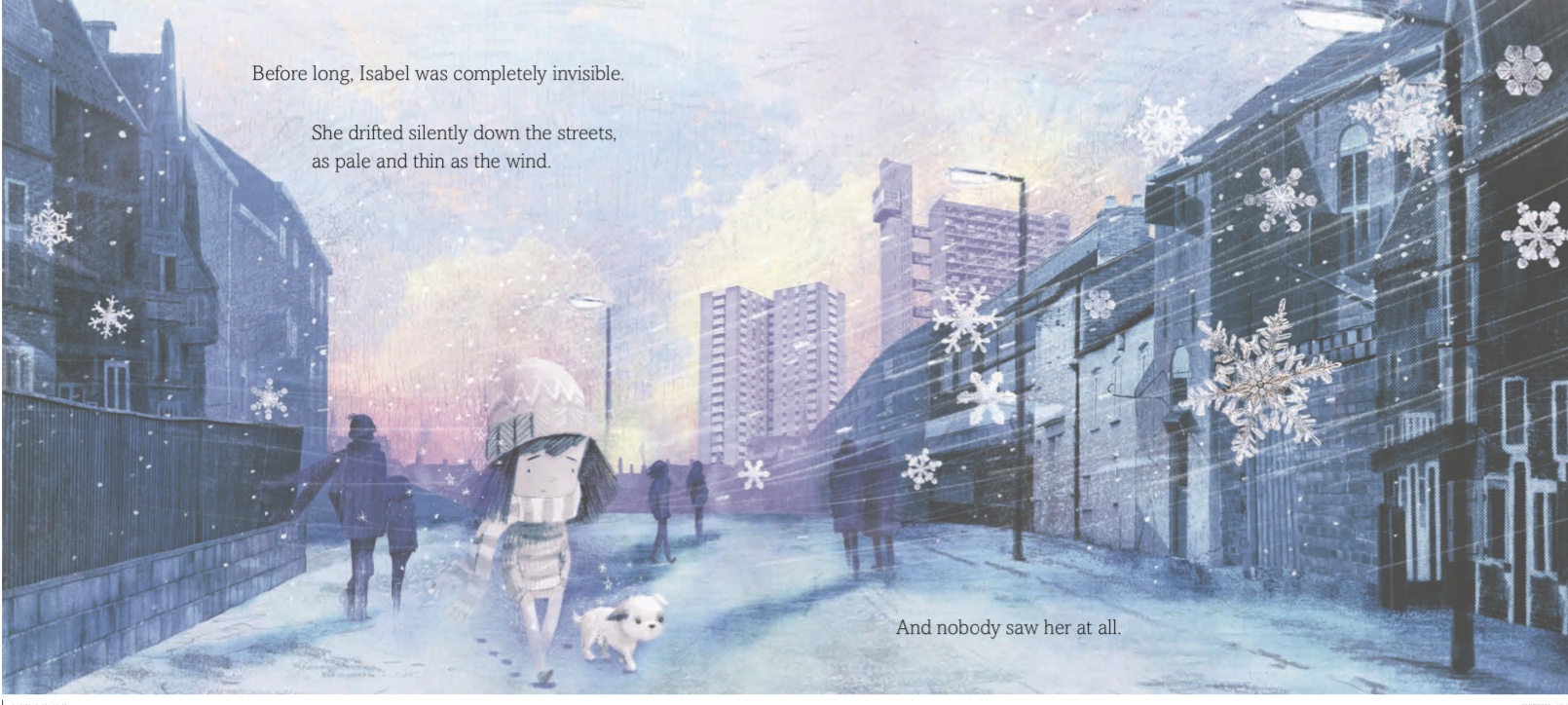
Tom’s illustrations just add to the power of his words.

You feel the chill of Isabel’s frosty bedroom in winter.

You feel the warmth of the fire, the family sitting around it.

You feel the invisibility of Isabel as she wanders around her new neighbourhood.

You feel hope when she realises she has made a difference.

Tom Percival has based this story on his own lived experiences. There are too many still living this experience.

We all have a place, somewhere we belong. It is not just poverty that can make people invisible to others. This book is an excellent way into having these unfortunately necessary discussions.

The message of hope the book delivers is powerful. It reminds us that small acts can make a big difference. It reminds us to look for the helpers.

I received an eARC from NetGalley and Simon & Schuster UK Children’s to review. Thank you