Meet Zélie Dutta. She has beaten her own father five times at chess (the last time he cheated). She has crushed the head of a poisonous cobra with her naked heel AND she can lick her elbow.
There’s nothing that she can’t handle… or at least that’s what she thinks. But when her father goes missing and a sinister secret society seems to be to blame, she’s forced to look for help in the most unlikely of places…
Swept up in a slew of crimes that stretch from the jungles of Calcutta to the sewers of Paris, Zélie and her new friend Jules begin a desperate hunt for the magical Snakestone at the heart of the conspiracy. Can they solve the ancient riddles and mysteries concealed in the miles of murky tunnels that twist beneath the ancient city above?
Review
It has a book map (said in the same voice as “It has pockets.”).
I thoroughly enjoyed joining Zélie and Jules on their adventures and derring do. Although Jules is more reluctant than Zélie to place himself in danger, he is a good friend and wants to help. He tries to warn her that not everyone should be taken at their word but she ignores his pleas, which puts her in mortal danger more than once. I particularly enjoyed the internal, motivational speeches Zélie gives herself when in need of a bit of extra bravery.
Set in the underbelly of Paris near the end of the 19th century and based on a colonial tale of a healing stone (with severe small print warnings), the story involves family separation and loss, subterfuge, circus acts, a secret society up to no good and a cast of diverse and often dastardly characters.
The main themes are friendship, trust, making the right choice, greed and power.
Thank you to the author for pointing out the absolute truth about pockets (severe lack of) in women’s clothes and the huge issue of back and front fastenings on clothing…how many items of men’s clothing need contortionist skills to fasten them? Exactly!
Thanks to NetGalley and Nosy Crow for the eARC in exchange for this review. The book will be published on March 14th 2024.
Domino is an eleven-year-old girl with a strange affliction: if she goes anywhere near magic, it will kill her.
All her life she’s been trapped in a floating laboratory, safe from magic but not from the cruel children and the crueler Science Barons who live there. Domino believes the Barons are trying to invent a cure for her magic allergy, but when a mysterious wizard arrives and unleashes total chaos, she discovers that everything she’s been told is a lie.
Domino escapes to the wondrous city of Abzalaymon, its streets filled with marvels she’s never seen, from automobiles to televisions to hulking thunder lizards. But the Science Barons are on her trail, and Domino must brave a hidden realm of magic if she is to defeat their sinister plot, and uncover a secret that might just save the world: the Secret of the Moonshard.
Review
Struan Murray has done it again. A superbly crafted story in a fantastically created world. The Scientarium floats above the city, tormenting Domino, who dreams of visiting it one day, who has known nothing else but the bullying / prankster revenge and testing cycles her life consists of, thanks to the Science Barons who raise her there “to protect her from magic”. Does she really need protecting?
Once again, following the highly original and exciting Orphans of the Tide trilogy, the author has delivered with a variety of well defined characters, twists and turns, magic and mayhem, chases that have you on the edge your seat and even some dinosaurs.
Creating characters with depth and believability is a special skill and Murray has this down to a fine art. The ones that I’m particularly drawn to are those who bring indecision to my mind…which side will these characters fall on when push comes to shove? Abzalaymon, the spirit, is a deliciously contrasting character, which puts you, as the reader, on edge. Will they help Domino, Calvin and Raphael…or eat them?
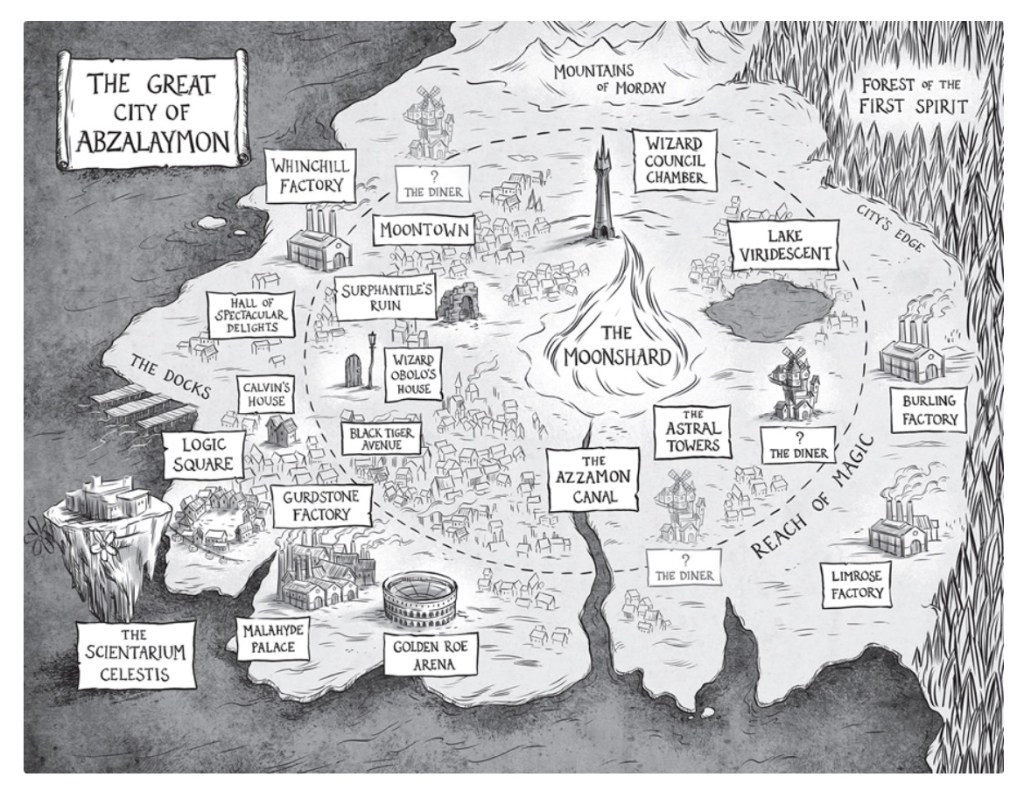
A book map is always a bonus.
Thanks to NetGalley and Puffin for the eARC in exchange for this review. The book will be published on March 7th 2024
Queen Clytemnestra’s world shatters when Agamemnon, a rival to the throne of Mycenae, storms her palace, destroys her family and claims not only the throne but Clytemnestra herself.
Tormented by her loss, she vows to do all she can to protect the children born from her unhappy marriage to Agamemnon. But when her husband casts his ruthless gaze towards the wealthy citadel of Troy, his ambitions threaten, once more, to destroy the family Clytemnestra loves.
From one of Greek mythology’s most reviled characters—a woman who challenged the absolute power of men—comes this fiery tale of power, family rivalry and a mother’s burning love.
Review
Going into this, the only retelling of the Greek myths I had read recently was Jessie Burton’s Medusa (which I reviewed here) so was unsure how I would find it. From my memory of Greek myths read as a child, I knew of Clytemnestra as Agamemnon’s wife and murderer, so was expecting that to be the story. However…
Susan C. Wilson takes us right back to just before Clytemnestra even meets Agamemnon, before he claims her as his wife and Queen, having been on a murderous rampage against her family to reclaim the throne he says is rightfully his. This enables us, through Clytemnestra’s eyes, to discover what brought her to the point of murdering her husband.
Clytemnestra, bizarrely for this era, decides not to seek vengeance for her murdered family, but to be his wife and put up with his vile attitudes, behaviour, ego, and general misogyny.
This part of her story is told by Clytemnestra herself, and the main focus is on her and the children, her love for them and her aim to protect them from their father. Only time would tell if this was the right thing to do or whether they would suffer because of her choices.
The children grew up with differing relationships with both Clytemnestra and Agamemnon, the latter’s mysogyny meaning Orestes (son) was favoured heavily from birth, the older girls, Iphigenia and Electra, being dismissed offhand. Despite Clytemnestra’s best efforts, Electra, a daddy’s girl, suffered the most from his dismissive attitude. Orestes and Electra shock their mother when they take their father’s side on a heartbreaking event later in the story.
All the way through this story, my thoughts were on how much danger women were in at all times, in those days. Just to survive, never mind thrive.
“She might be a poor farm wife and I a queen, but our similarities weren’t lost on me. We were pieces on a gaming board to be claimed, manoeuvred, and discarded by men. Rich or poor, famous or obscure, men made the rules that ordered our lives, and they broke them. She and I were women.
Clytemnestra puts her children first, above herself, and tries to instill “appropriate” female behaviour and attitudes inher daughters, mainly to protect them from their father’s wrath. Electra is having none of it, cannot understand why she cannot dress like her brother, go hunting and be trained in fighting skills as he is. Clytemnestra is blamed by Agamemnon for not bringing her up properly, Electra seeing her as a failure for not standing up to him over her upbringing.
Another theme I kept thinking about is that history is written by the winners. Throughout this book, different versions of the same events are told by people from different sides, or with a different viewpoint, having been involved in some way. Agamemnon’s victory over Clytemnestra’s family was joyous for him, heartbreaking for her. The same event, different viewpoints…both the truth… to the teller.
Agamemnon tells many stories in which he is the righteous winner (obviously) but pretty soon, Clytemnestra learns to mistrust everything he says and also wonder about the things he doesn’t say. It also means she mistrusts what anyone tells her, seeking verification from others.
There are so many familial links in the Greek timeline, so much to keep track of and I was glad of the family tree at the start as I needed to refer to it a fair bit. Even so, the power grabs made by all sides at different times resulted in many incestuous relationships, one of them being the last straw for Clytemnestra, making her decide the time had come to end Agamemnon.
Despite knowing more about what comes next, I will still be intrigued to read the next book in this series, as it is so well written.
Thanks to Neem Tree Press and @The_WriteReads for the ARC in order to take part in this blog tour.
A spine-chilling winter ghost story set in the months after the Great War. Perfect for lovers of MR James and Susan Hill
The War is over, but for petty criminal Charlie his darkest days are only just beginning.
Charlie Briggs is never off-duty, even when a botched job means he’s forced to lay low in a sleepy Hampshire town for the holiday season. Always searching for his next unwitting victim, or a shiny trinket he can pilfer, he can’t believe his luck when he happens upon a rare book so valuable it will set him up for life. All he needs to do is sit tight until Boxing Day. But there’s a desperate story that bleeds beyond the pages; something far more dangerous than London’s mobsters is lurking in the shadows.
Could the book be cursed? Why is he haunted by the horrors of war? Can he put things right before he’s suffocated by his own greed?
Review
Having recently read a few of her books, a couple of MGs and a YA dystopian novel, I was intrigued to read a ghost story by her. I was not disappointed. Yet again, Victoria Williamson delivers.
The author’s descriptive writing, detailing the gas attacks and hauntings, is superb, my heart did beat faster during a couple of the “chases”. She creates a hauntingly spine-chilling atmosphere and builds the tension effortlessly.
I had some difficult finding any redeeming characteristics in Charlie, the main character. He was a wrong ‘un but did he deserve what happened to him? Was it karma for all his wrong doings, which including dodging the war draft?
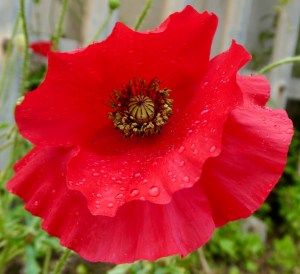
Like all the best ghost stories, some things are left to the reader to wonder … was what happened to Charlie really a haunting, or hallucinations from nonchalantly burning the dried poppy bookmark he found in the book?
Thanks to @silverthistleps and @The_WriteReads for a copy of the book for review purposes.
I recently read and loved The Pawnshop of Stolen Dreams (reviewed here) by Victoria Williamson, so I was keen to read her new book.
The two books could not be more different but they are both superb in their own way.
Blurb
Two very different lives. One shared hope for a brighter future. No time to waste. The flood is coming…
Eleven-year-old Norah Day lives in temporary accommodation, relies on foodbanks for dinner, and doesn’t have a mum. But she’s happy enough, as she has a dad, a pet mouse, a pet spider, and a whole zoo of rescued local wildlife to care for. Eleven-year-old Adam Sinclair lives with his parents in a nice house with a big garden, a private tutor, and everything he could ever want. But his life isn’t perfect – far from it. He’s recovering from leukaemia and is questioning his dream of becoming a champion swimmer. When a nest of baby birds brings them together, Norah and Adam discover they’re not so different after all. Can Norah help Adam find his confidence again? Can Adam help Norah solve the mystery of her missing mother? And can their teamwork save their zoo of rescued animals from the rising flood? Offering powerful lessons in empathy, Norah’s Ark is a hopeful and uplifting middle-grade tale for our times about friendship and finding a sense of home in the face of adversity.
Review
Norah and Adam live totally different lives…but neither is perfect.
Neither of them want the other to know their own realities, they do not want each other’s pity, just friendship. They also do not want their parents finding out about their friendship. This leads to a lot of wrong assumptions and unknowingly saying the wrong thing. However, their common interest in each wanting a friend, wishing for a pet and trying to look after random wild or feral animals brings them together.
The alternating chapters from Norah and Adam’s points of view are really effective in telling this story.
Norah’s Ark covers a lot of themes; bullying, poverty, homelessness, child illness, climate change. Separately they are all huge, heavy themes in themselves, but the author brings them together in this story with a deft hand, making it accessible for children to read and build awareness.
She adds in a measure of how each character perceives themselves and others, their lack of awareness of how keeping things to themselves makes it worse for everyone and how piling those secrets and lies up is bound to come crashing down around them at some point.
Williamson has written a beautiful story about awful situations that opens up space for discussions about the different themes in an accessible way.
Books are a window or a mirror for the reader. Or, in the case of this book, with so many different elements, it can be both. Whichever this is for you, use it to be more understanding of the situation of others or know that you not alone.
Thank you to @NeemTreePress and @The_WriteReads for an advance copy of the book in order to provide this review.
In a strange little village called Witchetty Hollow, eleven-year-old Florizel is the first to run into the curious visitors who’ve come to open a brand new Daydream Delicatessen and sack-baby factory.
At first, it seems the daydream confection and cheap sack children are the best things that could have happened to the poor folk of the Hollow – after all, who has the money to rent their child from Storkhouse Services these days? But after a few weeks, Florizel starts to notice something odd happening to the adults of the town. First, they seem dreamy, then they lose all interest in their jobs and families. Soon they’re trading all their worldly goods in the newly-opened Pawnshop for money to buy daydreams. With no money for rent payments, the children of Witchetty Hollow are being reclaimed by Storkhouse Services at an alarming rate. Florizel needs to act.
Review
This is a dark, sinister story that made my skin crawl at times but it is ultimately filled with hope.
Victoria Williamson has cleverly created a deeply creepy, Grimmesque fairy tale world, covering themes of greed, addiction and capitalism alongside those of friendship and community suitable for young readers (9+) that will have them fearful for Florizel and Burble but also page turning hopefully to find out what happens next.
There is a wide range of characters, from mostly good to downright wicked, in particular the child repossessing “nurses” who are just as ominous and scary as the infamous child catcher in Chitty Chitty Bang Bang.
Illustrations by James Brown
The dark and light of the story is reflected in the descriptions. The Dream Delicatessen and Pawnshop evoke scenes bursting with colour and sparkle, in stark contrast to the rest of the town, which is shrouded in gloom and despair. James Brown’s black and white illustrations capture the drama and atmosphere perfectly.
In Scotland, dressing up at Hallowe’en and visiting other houses is called guising. The fear inducing Gobbelino guisers, in their cloaks and masks, made me reminisce about a childhood Hallowe’en where someone (a friend of my parents) came guising to our house in a huge coat and mask and, to this day, I still do not know who it was. This story is as creepy as I felt that night.
Thank you to Tiny Tree Books and The Write Reads for a free digital copy of the book for review purposes.
Isabel and her family are poor but happy. They have each other. Isabel finds positives in her world. But one day there is no longer enough money to pay their bills. They have to move to a block of flats in a more urban area.
Isabel struggles to find positives around her and feels herself becoming more and more invisible every day.
Then she realises she can see other “invisible” people. She sets out to help them do small but good deeds. Their invisibility soon disappears and Isabel realises she and her new friends have made a difference.
Tom’s illustrations just add to the power of his words.
You feel the chill of Isabel’s frosty bedroom in winter.
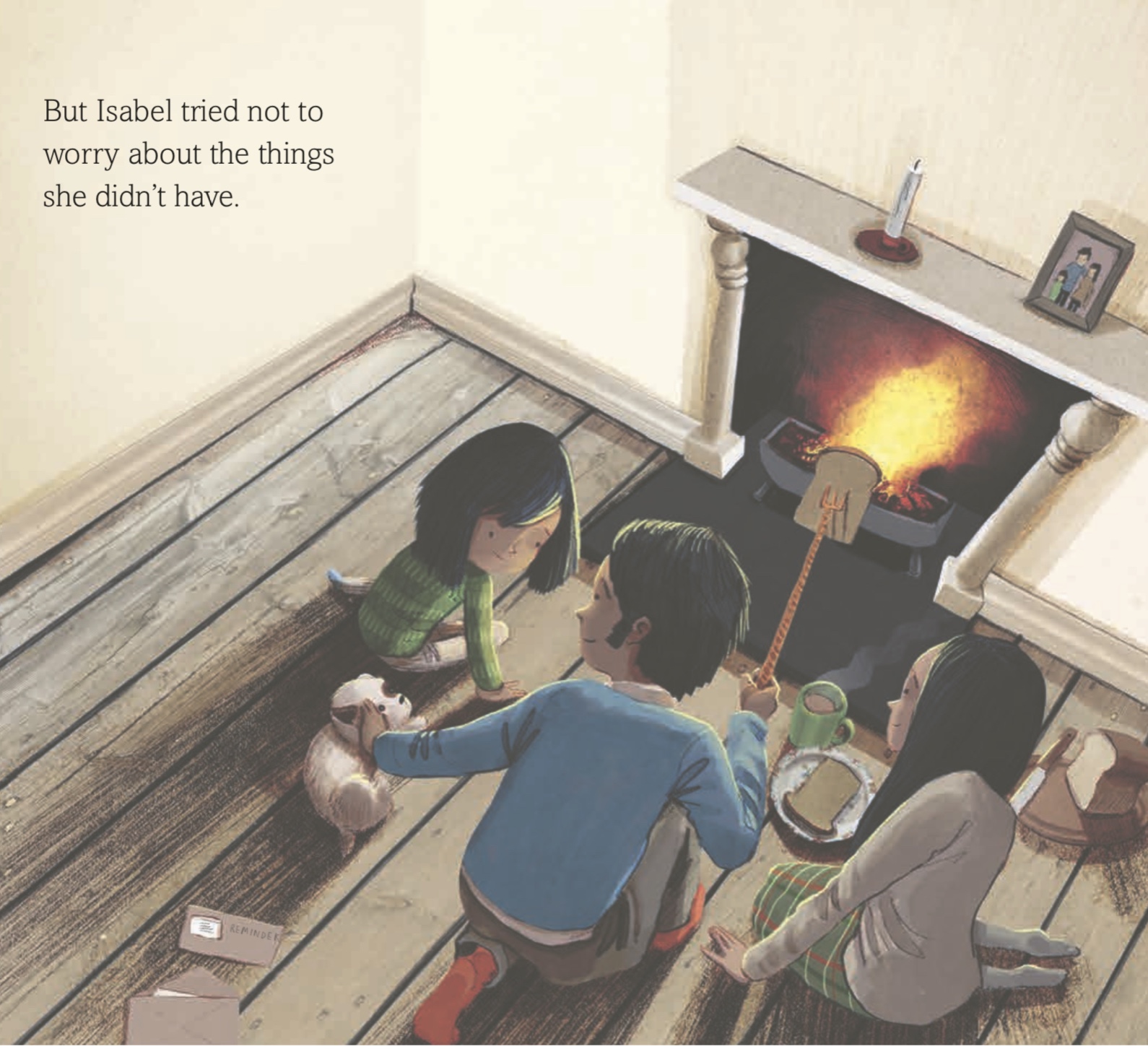
You feel the warmth of the fire, the family sitting around it.
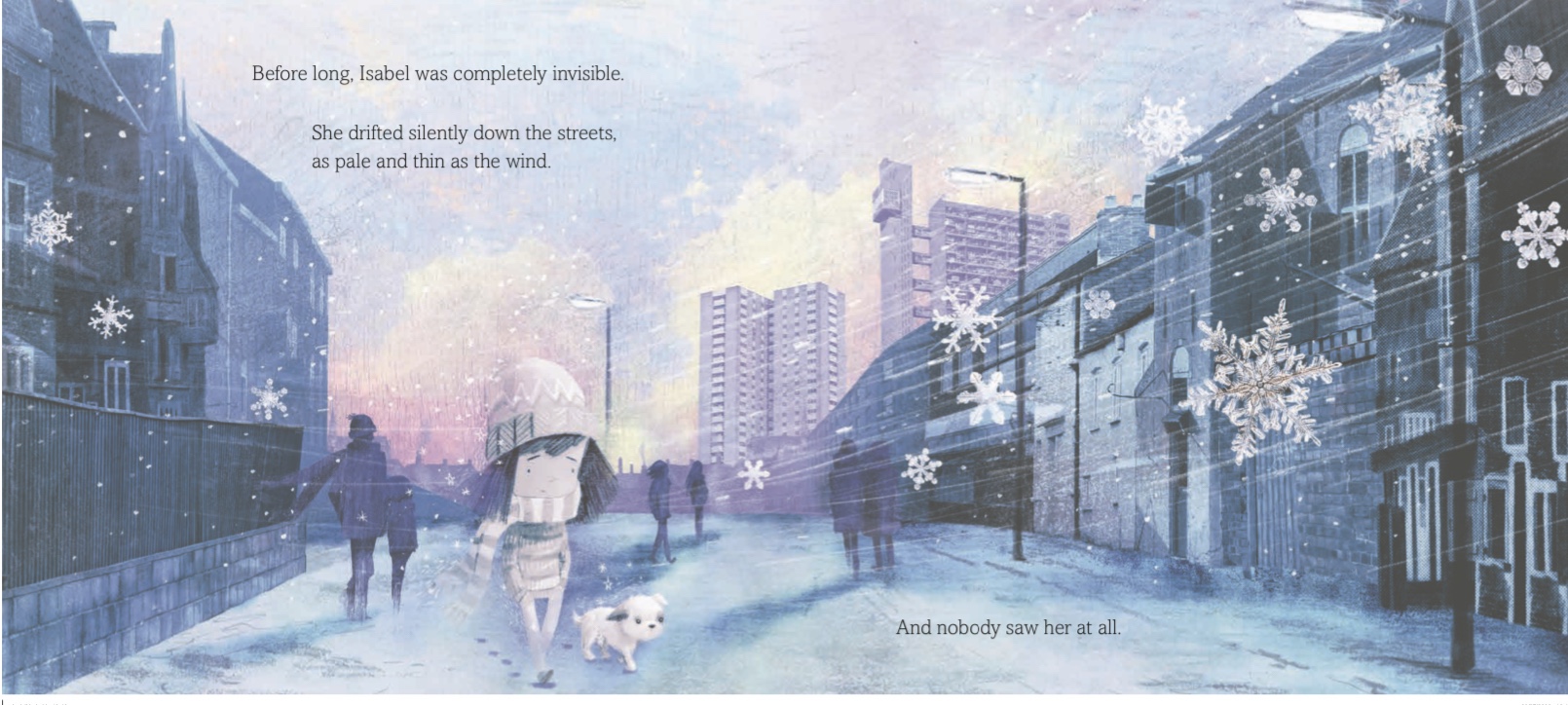
You feel the invisibility of Isabel as she wanders around her new neighbourhood.
You feel hope when she realises she has made a difference.
Tom Percival has based this story on his own lived experiences. There are too many still living this experience.
We all have a place, somewhere we belong. It is not just poverty that can make people invisible to others. This book is an excellent way into having these unfortunately necessary discussions.
The message of hope the book delivers is powerful. It reminds us that small acts can make a big difference. It reminds us to look for the helpers.
I received an eARC from NetGalley and Simon & Schuster UK Children’s to review. Thank you







 Beth's Bookcase