For wolf-demon Kari, these define her every waking moment. Her parents are dead, slaughtered by human hands, forcing their only daughter to masquerade among their killers to save her own skin. Now she dwells among them, hiding her lightning-based abilities and plotting a terrible revenge, believing her schemes are all she’s good for now. But when she discovers unexpected solace among a group of humans who look past her monstrous nature, Kari finds herself questioning everything. Her mission. Her dreams. Even the hatred festering in her heart.
Is it possible for a creature like Kari to find happiness in a world that despises her?
Or will the spectres of her past force her down the path of vengeance in the end?
Review
As I started reading this I did not expect it to affect me as much as it did. It is to the author’s credit that I was pulled into Kari’s world and didn’t want to leave.
Valerie Storm has created an imaginative, dangerous world in which Kari has so much thrown at her from such a young age. This book does not shy away from violence and death, those Kari builds relationships with put in danger because of the power Kari was born with, despite her trying to keep it hidden, and those who are hunting her.
I had to keep reminding myself that Kari was a teenager to explain some of her reactions but she copes extremely well given her limited knowledge of her gift, the way most people treat her and the trauma of loss and separation she suffers. Her feelings of isolation, indecision and need for revenge drive her.
This is not a cosy fantasy story, it is hard hitting and powerful, better for it. It also ends on a twist and cliffhanger like no other.
I thought I was going to have to wait for the next book in the series so was very happy to realise that this was published in 2022 so others in the series are already out. Off to buy them.
Thank you to @The_WriteReads and Shadow Spark Publishing for the review copy.
I am resharing this blog to celebrate the release of the latest and final book in the series.
The Demon Storm series follows Kari Kasente, the wolf demon destined to destroy the world. While battling an innately crueler self, a Shadow Witch intent on controlling her, and a series of other enemies, Kari must learn to trust herself and those around her. Only then can she find her light and save the world.
The final book in the series, Fate of the Storm was released on May 13, 2025.
About the Author
Valerie Storm was raised in Tucson, Arizona. Growing up, she fell in love with everything fantasy. When she wasn’t playing video games, she was writing. By age ten, she began to write her own stories as a way to escape reality. When these stories became a full-length series, she considered the path to sharing with other children & children-at/heart looking for a place to call home.
It’s easy to stand up for your friends. What about for anonymous creatures nobody else cares about?
With their homes apparently safe from the magical storms, Darin and Rinloh venture to an isolated elven village and another ancient mystery: ruins of an imperial city whose entire population vanished centuries ago.
The duo befriend a host of eccentric new characters, from a chipper ogress and hipster troll to a deadpan griffin. Yet the Forest of Nightmares challenges them as never before. Merciless carnivorous trees, subterranean horrors, ethereal creatures no mortal weapon can slay… and most sinister of all, the greed and ambition lurking within the human heart.
Darin and Rinloh’s empathic connection grows stronger the deeper into the wilderness they go, but will it be enough to stop a dark conspiracy from ravaging the land?
Arvia: Wings of the Wild challenges the harpy-human duo with their grandest adventure yet. They must balance their deepening relationship as they sharpen their skills and work together as never before to unravel a deadly new plot.
Review
A book that has a map is off to a cracking start, in my opinion.
This series, of which this is the fourth book, is mainly character/relationship driven, but the adventurous story is not compromised by this.
Darin has been transported from his mundane earthly existence, via a meeting with an extraterrestrial of questionable character, to a hew life on Arvia, a world full of magic as well as many different species, some friendly, some not so friendly and some downright deadly. On Arvia, humans are the smallest, weakest and generally most vulnerable so he has to use his very limited life skills to stay alive, which causes him problems. He manages to persuade a harpy not to eat him and they become the unlikeliest of friends.
The themes in the story explore friendship, differences, relationships and trust, which becomes more interesting when your life may be in danger at any point. As the characters get to know each other and decide whether their preconceptions were correct or not, we find that many myths about them are blown out the water.
Rinloh (a harpy) has grown up being told about the evils of elves, ogres, trolls and fairies…but is what she has been told the real story?
Despite their differences and preconceptions of each other, each of the different species brings their own skills and knowledge to the group, and this makes them stronger.
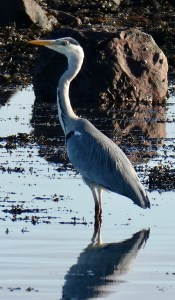
In amongst the adventure and peril, there are some side stories. As anyone who follows me on Twitter will know, I have a soft spot for herons so was particularly invested in the small part involving the pet heron one of the conclave visitors had brought with them. It was concerning when it got caught up in one of the attempts on Darin’s life.
My “adopted” local heron, Harold
My favourite character in this story was Maurice, the griffin (definitely not a flying cat). He turned out to be the fount of knowledge where the ruined city was concerned, whilst remaining aloof/grumpy and uncompromising, although could be persuaded to go against his better judgement for a pampering brush.
I also loved the author’s nod to one of my favourite films in some of Darin’s sarcastic responses … inconceivable.
Thank you to D.H. Willison ( @dhwillison ) and @The_WriteReads for an advance copy of this book for the purposes of this review/blog tour.
This is not going to be a normal review post. I am joining Ben Harris (@one_to_read) and others on Twitter this month to celebrate the work of Jan Mark. I will add to the blog (not promising it will be daily) on my readings over the month. They are more notes than a narrative. I apologise in advance if they seem disjointed, I am finding new links as I read and type these. I may return to previous days and add/edit as I read further.
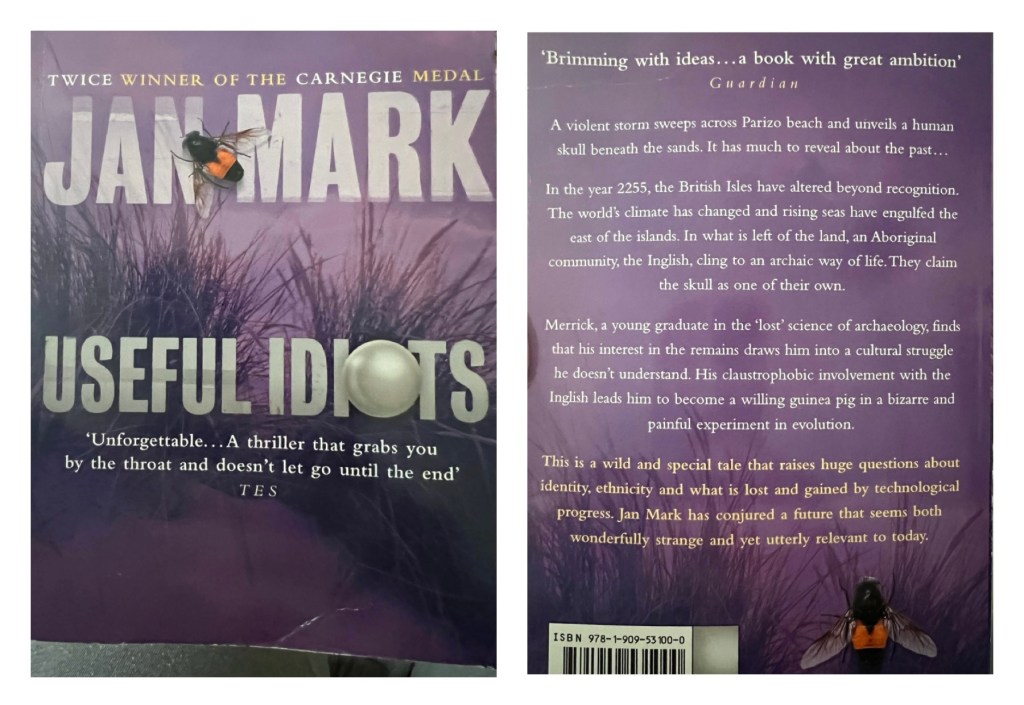
Having mostly read short stories in previous #janMARKuary Januarys, I am starting with a novel this time, Useful Idiots. I will read a chapter a day for 13 days then chose something else.
1st January
I want to focus on Jan’s vocabulary choices and the descriptive images she creates and enhances with the use of one or two extremely well appointed words.
glistened oilily – even saying the word oilily out loud adds texture to the description.
the scything wind – no added comments needed here, we all know what this feels like.
“the auditorium…was raked, with long curving rows of seats” – typing this made me think Jan is linking human made structures with the land and fits in with other imagery and word choices in the text so far.
plastered maquillage (I had to look that up) – there is a passage later in the chapter that builds on this, that shows how caked on the stage make up was.
obdurately blank – Jan uses this phrase to describe a screen wall in a theatre, conjuring audience impatience for the show to start.
city canyons – appears in the middle of a description of a landscape ravaged by a hurricane. I immediately imagined a sweeping view from a drone flying over/down the streets of a very build up urban landscape.
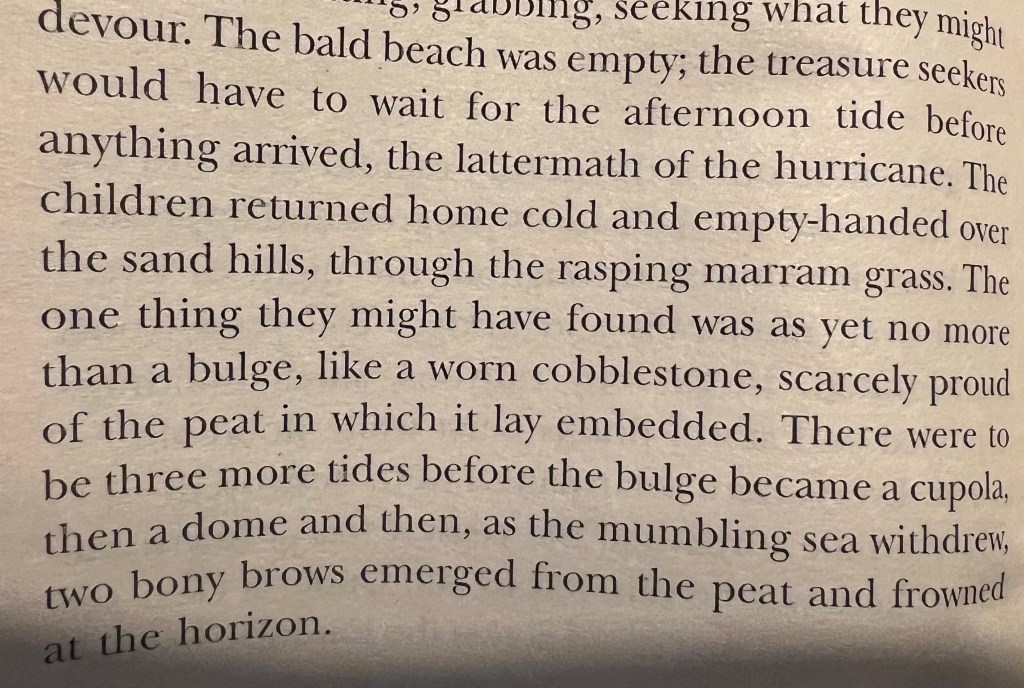
“lattermath of the hurricane” feels like it should jar, but it doesn’t. The dictionary definition refers to the second mowing of a crop. Jan has used it to detail something buried in the sand, “scarcely proud”, that would be further exposed once a second tide had ebbed and flowed. Here is the full paragraph is all its glory.
Archaeology is key to this story and Jan’s phrasing and word play is wonderful. She describes the work of the archeologists as cutting “into their past through a layer cake of centuries”.
Buildings are falling or being dismantled (reasons not yet known) and new builds will be erected, pinning down the past”.
2nd January
The second chapter gives us more details about cultural tensions, the uncovered skull being discovered close to or on the unmarked border between territories. I will look at this as we go further into the story and get more detail.
However, I want to look at the tension between two characters today: Merrick Korda, a graduate trainee, and his archaeologist boss Remy Turcat. So far, we see this from Merrick’s point of view, but it tells us a lot about Turcat’s character. It is unclear if the tension is purely a power one based on position in the organisation or if there are other things at play.
Is Merrick one of the useful idiots of the title? This is not clear yet. But Turcat definitely treats him like an inferior being. Jan describes this all too familiar treatment well, also reflecting the wider cultural tensions, not just that between the two individuals.
“Turcat had neither welcomed him nor turned him away: he was expected.”
“He regarded Korda as little as his own shadow: it was always there beneath him; he did not expect it to speak.”
“…validating Merrick’s suggestion by appropriating it.”
“Turcat looked across at Merrick and had to acknowledge him.”
“He was used to being invisible but not so invisible that he was forgotten.”
There is a definite sense of othering going on from a position of privilege.
3rd January
As the skeleton discovered on the beach is unveiled, slowly, layer by layer from the peat surrounding it, so Jan cleverly reveals the layers of cultural mistrust, misappropriation and history behind the conflict between the indigenous, “archaic” Inglish and the others (so far no name has been attached to them).
Despite Turcat’s dismissive attitude towards Merrick, when it is revealed that he is descended from the Inglish, although he has neither lived in their territories nor followed their lifestyles, Turcat is surprised. This leads me to believe his othering and unbotheredness of Merrick has, up to this point been down to position and privilege. Their boss, on the other hand is downright racist and does not hide it, once Merrick’s ancestry has been voiced aloud.
The way Jan has written the two narratives as one, unpeeling layers to get us to the truth of the matter, is highly skilled and a testament to her skills as a writer.
4th January
Merrick is told to get lost for a couple of days by his boss. He gets on the wrong train and ends up being manipulated into visiting the fen land of the Inglish by someone he has only met once, by chance. The manipulation is subtle and well executed considering it was a chance encounter.
10th January
I finished quicker than anticipated as I was so drawn into the story I could not limit to one chapter a day.
Even though written in 2004, a lot of what Jan has written in here is relevant today: unions, riots, suppression of indigenous people.
The useful idiots of the title are the general population, manipulated into certain behaviours by the media and rich business people with agendas of their own to achieve their goals. Merrick is also a useful idiot, both to Turcat and to the Aboriginals, even more so with the decision he makes without their knowledge.
I had to check the definition of Aboriginal, as Jan chose it to define the indigenous people of Europe, not something I was familiar with.
My understanding/knowledge of the words is in reference to the indigenous people of Australia. The other definition is not place specific: The aboriginal people or animals of a place are ones that have been there from the earliest known times or that were there before people or animals from other countries arrived.
Manipulation is a strong theme running through this story. Manipulation of university departments and staff, protestors, the general public, the indigenous population individuals and in Merrick’s case, his own body. The reasons for, and outcomes of, the manipulation are different in each case and the outcomes not all what was anticipated.
Although described as a YA novel, this presents more as an adult read. I cannot quite put my finger on why. It is definitely not an MG. All the characters are adults. There is no reason it could not be a YA, the themes and content are appropriate and suitable for YA discussion and interpretation.
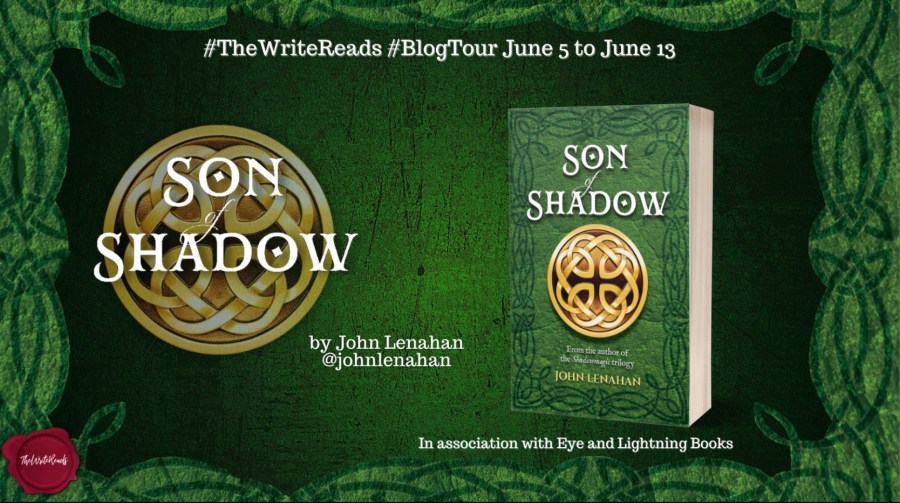
Son of Shadow is the start of a new fantasy trilogy, following on from the Shadowmagic Trilogy. Admission…I have not read the original trilogy but will be rectifying that soon. This omission did not detract from my enjoyment of the book, but would have helped in following who was who as the story unfolded.
Thanks to The Write Reads @The_WriteReads and Eye and Lightning publishers for the advanced copy to review.
Blurb
A world of faeries, leprechauns and dragons – and magic fuelled by the blood of trees.
A mystery portal to the Real World.
And a pair of curious young adventurers who know they shouldn’t step through it…
Meet Fergal the Second, nicknamed ‘two’. Or ‘Doe’, in his own language. He can do magic. But, for the moment, he’s forgotten where he’s from. Or what’s happened to his blind friend Ruby.
He’s actually from Tir na Nog, the enchanted world of Shadowmagic, where a new generation of the royal House of Duir are cheeking their parents, preparing for adulthood and itching to see the Real World for themselves – whatever the peril.
Review
The story is split into three parts. The first covers Fergal’s introduction to the Real World, where he has no memory of where he came from, who he is or what he is doing. Something is clear though…he loves Real World pizza.
He does know how to make coins disappear, not slight of hand like a stage magician, but actually disappear. He then struggles to understand why he gets into trouble for doing so, despite being told he won’t, as the coin owners think it is deception, not magic.
Fergal then works out that he needs to find his sister. On his travels, having escaped from an asylum, he meets people who know of his faerie home land and of his family, some helpful, some not. With help, and some setbacks, he manages to get to where he needs to be, but still cannot find his sister.
The second part is set back in Tir na Nog, Fergal’s home. We discover through his memories who he is, how his sister disappeared and how his homeland is linked to the Real World. We also meet his family and friends.
Fergal is a cheeky teenager who rebels against his family’s teachings at times but at heart is a good kid. He learns the hard way that putting off admitting something to those who can help does not always end well,
The final part brings the two worlds together. Fergal and his friends have to work together, using magic to rescue not only his sister but also other family members from an evil sorceress.
The ending sets up for the next instalment very well, with Fergal saying “Oh cack” at what is to come, and I for one am already looking forward to continuing the story. It is at this point that reading the original trilogy would have been most helpful.
The author has created well rounded characters, warts and all, and the world building, especially Tir na Nog, is exceptional.
Book Info
Genre: Fantasy
Length: 310 Pages
Publishing: 25th June 2022
About the Author
Born in Philadelphia but long settled in the UK, John Lenahan is an acclaimed magician and TV performer. He fronted his own BBC2 magic series Stuff the White Rabbit, played the voice of the toaster in Red Dwarf and has appeared on a wide range of entertainment shows including TFI Friday, Comedy Café and Celebrity Squares. He is a member of the exclusive Magic Circle. He is also the author of the popular Shadowmagic trilogy, a fantasy adventure series for young adults which combines Irish folk myth with 21st-century wit. Son of Shadow takes up the story once more, following the noble houses of the magical parallel world of Tir na Nog into the next generation.
Exiled, with her sisters, to a far-flung island by the whims of the gods, Medusa has little company except the snakes that adorn her head instead of hair. But when a charming boy called Perseus arrives on the island, lost as he sails the seas on a quest to save his mother, her lonely existence is disrupted with the force of a supernova, unleashing desire, love and betrayal…
The stunning illustrations throughout the book, by Olivia Lomenech Gill really being the island world of Medusa alive.
Jessie Burton has retold this myth superbly, bring it bang up to date with the feminist slant it very much needed. It is told from the view point of Medusa and because of this, the themes come across much more emotionally and with impact.
As Medusa and Perseus gradually tell each other their reasons for being on this far-flung island, we can see that perception of themselves and others is a very personal thing. Perseus holds Poseidon in high regard, Medusa hates him with a vengeance. Similarly, their views on Athena differ too.
There are strong themes of self worth, perception of how you are viewed by others and how this affects your behaviours and attitudes, how the opinions (real or perceived) of others impact on you and ultimately change you.
There are strong themes of consent and respect. Medusa’s feelings of how Poseidon should have behaved towards her (as opposed to abusing his power) and how she was not to blame are deeply felt. Her sisters’ allyship is strong but not all other women are her ally. Athena’s use of privilege and power are selectively abusive.
The promises we make…do we actually know what we are promising at the time? Open ended promises are not always good ones.
Throughout the retelling, Medusa’s view of herself, others in her life and her awareness of how the rest of the world perceives her opens up opportunities for conversations to be had. Important conversations.
Thank you to NetGalley and Bloomsbury for the eARC review copy.
Cyan has lived at the Elsewhere Sanctuary for as long as he can remember, freed by Dr Haven from dark memories of his past life. But when Cyan finds a mysterious warning carved into the bones of a whale skeleton, he starts to wonder what he had to forget to be so happy.
New resident, Jonquil, begins to resist the sanctuary’s treatment, preferring to hold on to her memories – even the bad ones. So when Dr Haven resorts to harsher measures, Cyan embarks on a secret mission to discover the truth about the sanctuary…and himself.
This is an intricately constructed dystopian world, a mixture of what we know blended with sci-fi … an island where the tide went out and never came back again, no wildlife, an invisible boundary shield, a building that can reset its rooms (like 3D Tetris), tracking devices, clocks with no hands, memory suppressing drugs and teenagers who just want to forget.
The themes tackled in this story are difficult ones and raise many ethical questions. Guilt, sorrow, medically induced memory loss, secret experimental drug trials.
Through the story, the author helps us to see that all our memories, experiences and feelings make us who we are, mould us into the people we become. Just because you cannot remember a key event or person does not mean you are no longer unaffected, even subconsciously.
Despite the difficult themes and my worry for what comes next for the characters, I thoroughly enjoyed the story and was engrossed in the lives of the characters and the world they inhabited. This is the first book I have read by Darren Simpson but it definitely won’t be the last.
Adam-2, a robot, has been locked in the basement of a lost building for over two hundred years, following a daily routine – until one day he is discovered by two children, and emerges into a world ruined by a civil war between humans and advanced intelligence. Hunted by both sides, Adam discovers that he holds the key to the war, and the power to end it – to destroy one side and save the other. But which side is right? Surrounded by enemies who want to use him, and allies who mistrust him, Adam must decide who – and what – he really is.
Over the past few years, there has been a distinct lack of Sci-fi books for children. Thankfully, this situation is changing. This is Chisholm’s second, and is even better than his debut in this genre, Orion Lost, which was excellent.
Adam-2 is told from two points of view – the robot, Adam-2, and one of the humans, Linden. It is good to finally read a story with a non binary main character (using the pronouns ze/hir), who is integral to the plot.
Adam-2 is not like the other robots, he can think and imagine scenarios, not just follow programmed orders. He can learn and apply his knowledge. He is also immune to the EMP charges that the humans use to temporarily disable robots they fight against. Adam-2 has to work out what has happened to create, and prolong, the long term war between the humans and robots and find a way to end the war to bring peace.
There are various themes throughout – war/peace, friendships, family, trust and the rights and wrong of developing AI. Via Linden, and the influence hir mother (and her death) has on hir, we witness the struggle to work out the right path to take and also the power of telling stories, both to the teller and the audience.
I enjoyed Adam-2 and thoroughly recommend it. 5 star plus.
“It’s no good rewilding the world , if we do not rewild ourselves.”
Sylvia has been brought from her city home in Newcastle to the vast, never-ending landscapes and skies of rural Northumberland for a break. She feels cut off, isolated and, in a strange way, enclosed by the depth of seemingly endless darkness that first night.
She then meets enigmatic Gabriel, who shows her the countryside and links to the past. Their walks and talks enable Sylvia to look within herself and within the landscape for connections to the past, her past, the past of the landscape and nature. This is deepened by her making of an ancient musical instrument from the wing bone of a buzzard.
Sylvia is concerned about humans and the destruction they bring to the planet. By embracing her surroundings, the history, the music and the people, by letting herself get lost in them, she finds her true self as well as hope and light, which gives her a deep, deep sense of belonging and courage to fight for the future.
David Almond is a master wordsmith, painting stunning images in the reader’s head. His prose is poetic, lyrical. It evokes the infinite landscape and skies of Northumberland, the musicality of nature and the wilderness through time.
As I read this, I could not help but reference the words and images of The Dam (2019, David Almond, illustrated by Levi Pinfold), which has the same modern/ancient, music/ghostly themes. The flooded village is later mentioned in Bone Music, the lake now part of the natural, ever changing but constant landscape.
The themes of humans verses the environment, ancient verses modern, light versus dark, destruction versus creation are deep. Sylvia’s journey to Northumberland and inside herself provide hope, light and music that will strengthen and heal.
Whilst Sylvia is the main character, for me the landscape and music are the unconventional stars of this story.
The cover design, by David Litchfield, is hauntingly beautiful. It encapsulated so much of the meaning in this story.
I was provided with an eARC of this by NetGalley and Hachette Books. Thank you.
The Follower is a YA story that follows the story of teenage triplets, Cecily, Amber and Rudy Cole. They are the personalities that front the family’s social media influencer account about house flipping. They take on multi million dollar makeovers, live-streaming and photoshopping their way to sponsorships that increasingly become needed due to the family finances. The majority of followers (The Cole Patrol) are in awe.
The triplets each had their own “thing” on social media. Cecily does make up and wanted to delve into the chemicals and science of the make up. Amber has been relegated by mum to the behind camera operations, despite wanting to promote her plus size fashion tips and Rudy has become the “host with the most”, when all he wants to do is investigate and dabble in his music.
But all is not as “prefect” as it seems, both on social media and in their lives. The triplets are increasing fed up with their mother’s control of their output (mainly due to financial pressures) and the never ending need for the perfect shots to up the follower count.
When they take on a house in the New York suburbs that has been empty for a few years after a suicide, the locals are none too happy and neither is one particular follower. This is when things start to totally unravel for the Cole family.
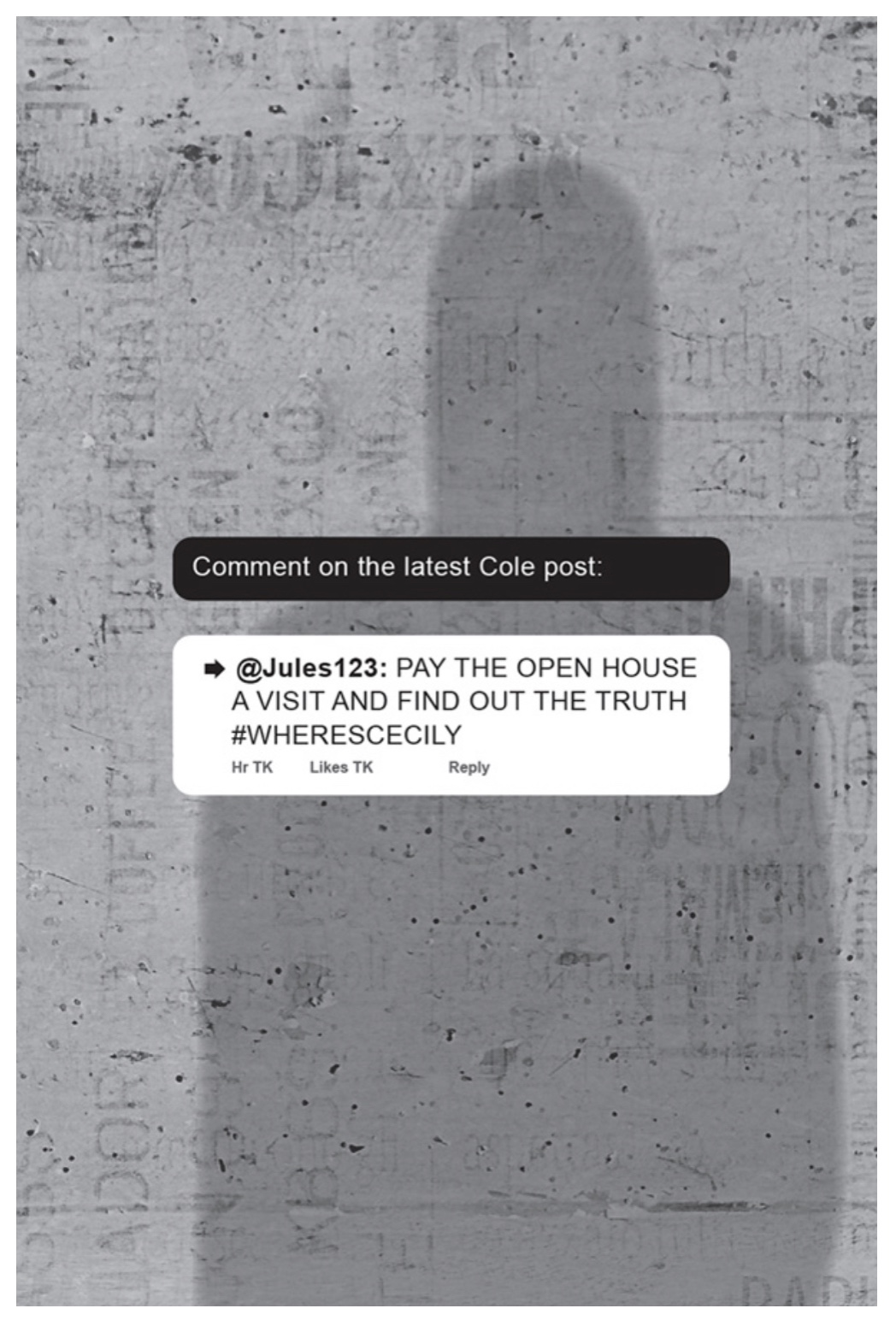
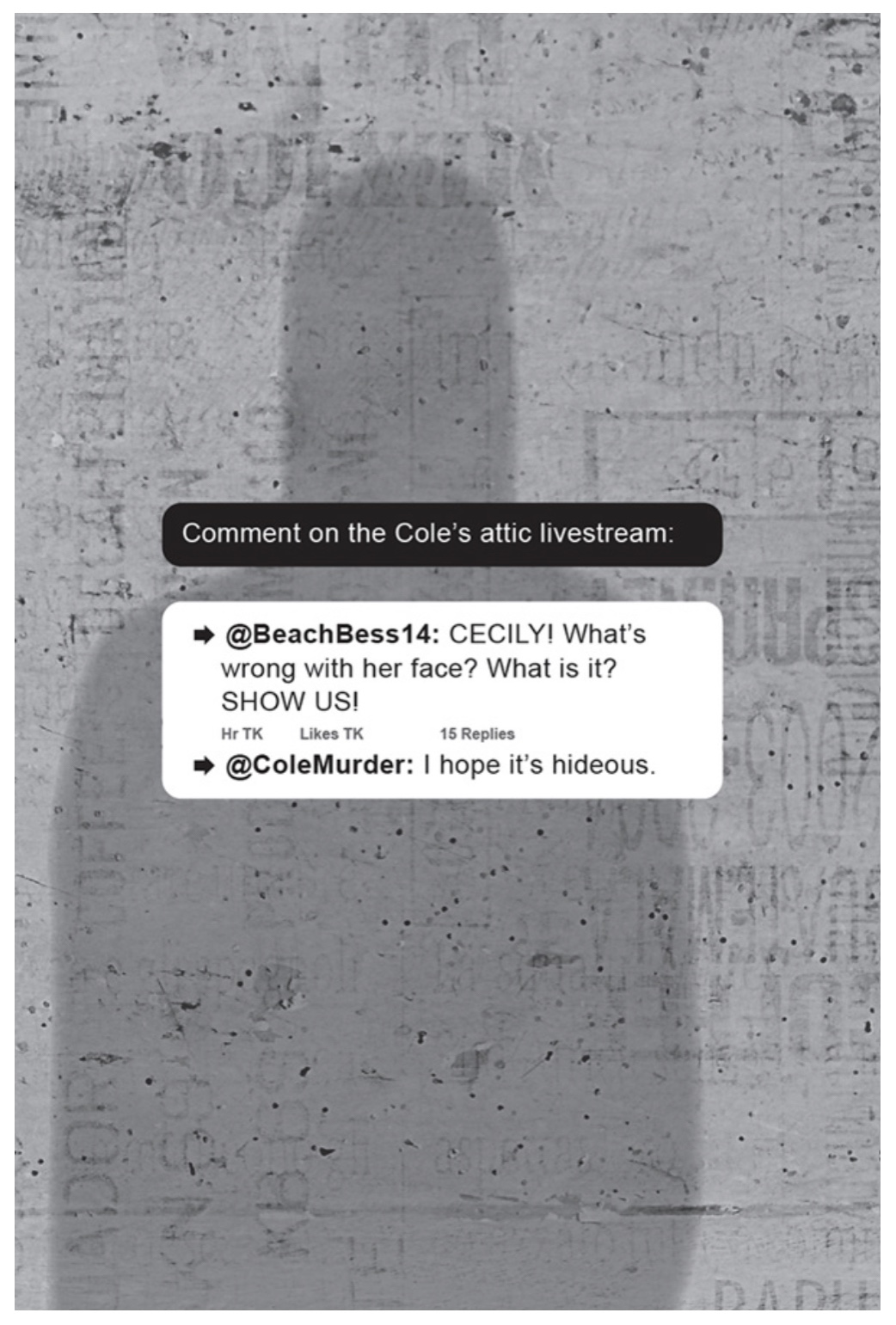
The Follower posts messages to their account warning them off “my house”. The family ignore these until strange things start to happen. Items are moved or disappear, doors are locked that were previously open, shadows are seen, footsteps heard…but no solid evidence. The normally encouraging and cheerleading followers start to take notice of The Follower’s postings and accuse the Coles of fake news and faking accidents for internet hits, turning against the family.
I wanted to tell them to stop posting, but like all horror stories, characters always do things we all know would be sensible not to.
The incidents become increasingly life threatening but are difficult to prove to the police. Rudy takes on his own investigation, with the support of his sisters and a couple of local teenagers they have befriended. This just increases the rage of The Follower.
The tension builds during the story, clues lead in a range of different directions until the final, slightly bemusing denouement. I felt there were not enough hints earlier in the story to have possibly worked out who The Follower was. However, the explanation added to the depth of the back story. There is no final “happy” ending…we are left wondering what will happen next.
There are some difficult themes in this book: loss, disfigurement, stalking, death, suicide, as well as the overarching theme of social media portrayal of life vs reality (lies vs truth?), which leads the narrative and is very uncomfortable at times.
There are some follower posts between each chapter, on a background of a shadow (The Follower). These add to the creepiness of the story. I noticed that the shadow is not always in the same place, which added to my unnerved feeling.
Cover and other illustrations are by Hana Anouk Nakamura.
This is a story loosely based on an ongoing true story. It is deeply unsettling.
Thanks to NetGalley and Amulet Books/ABRAMSbooks for an eARC.





 Beth's Bookcase